KaidoTrainer
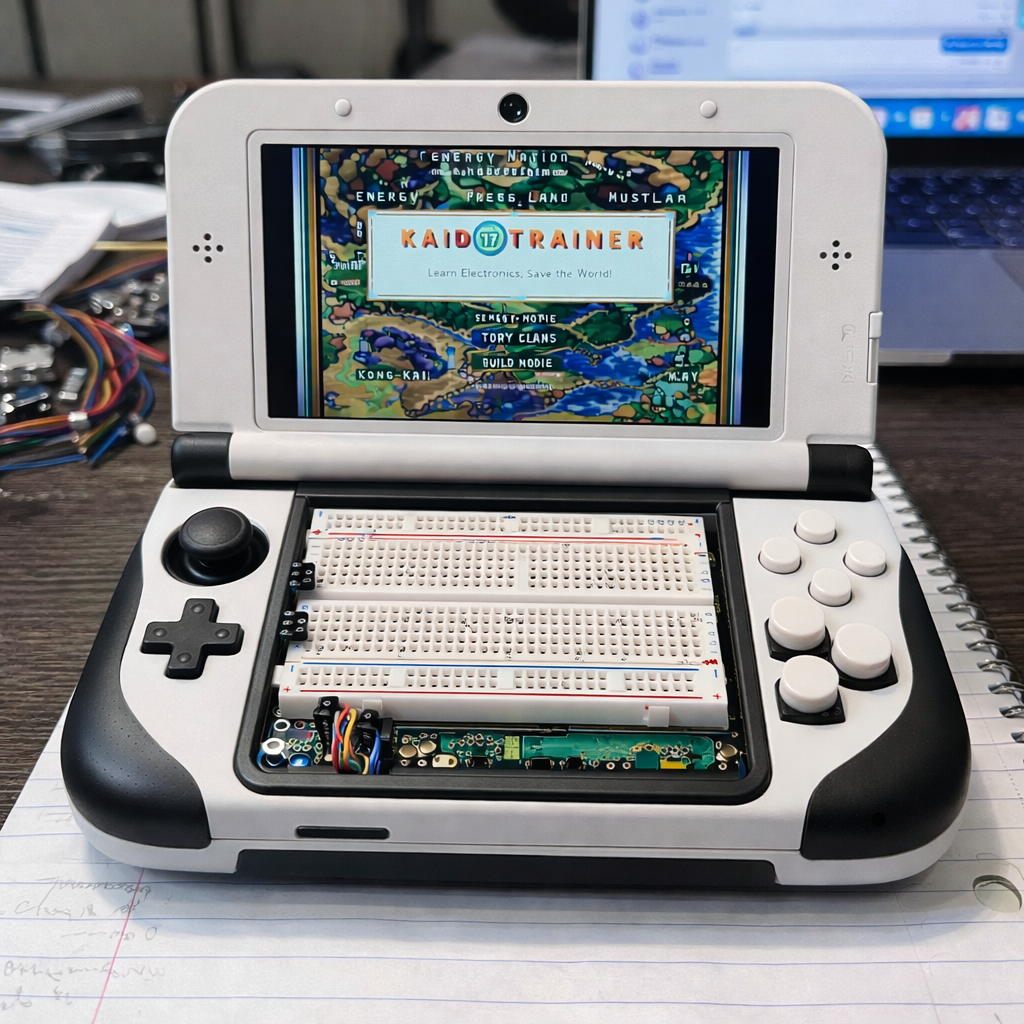
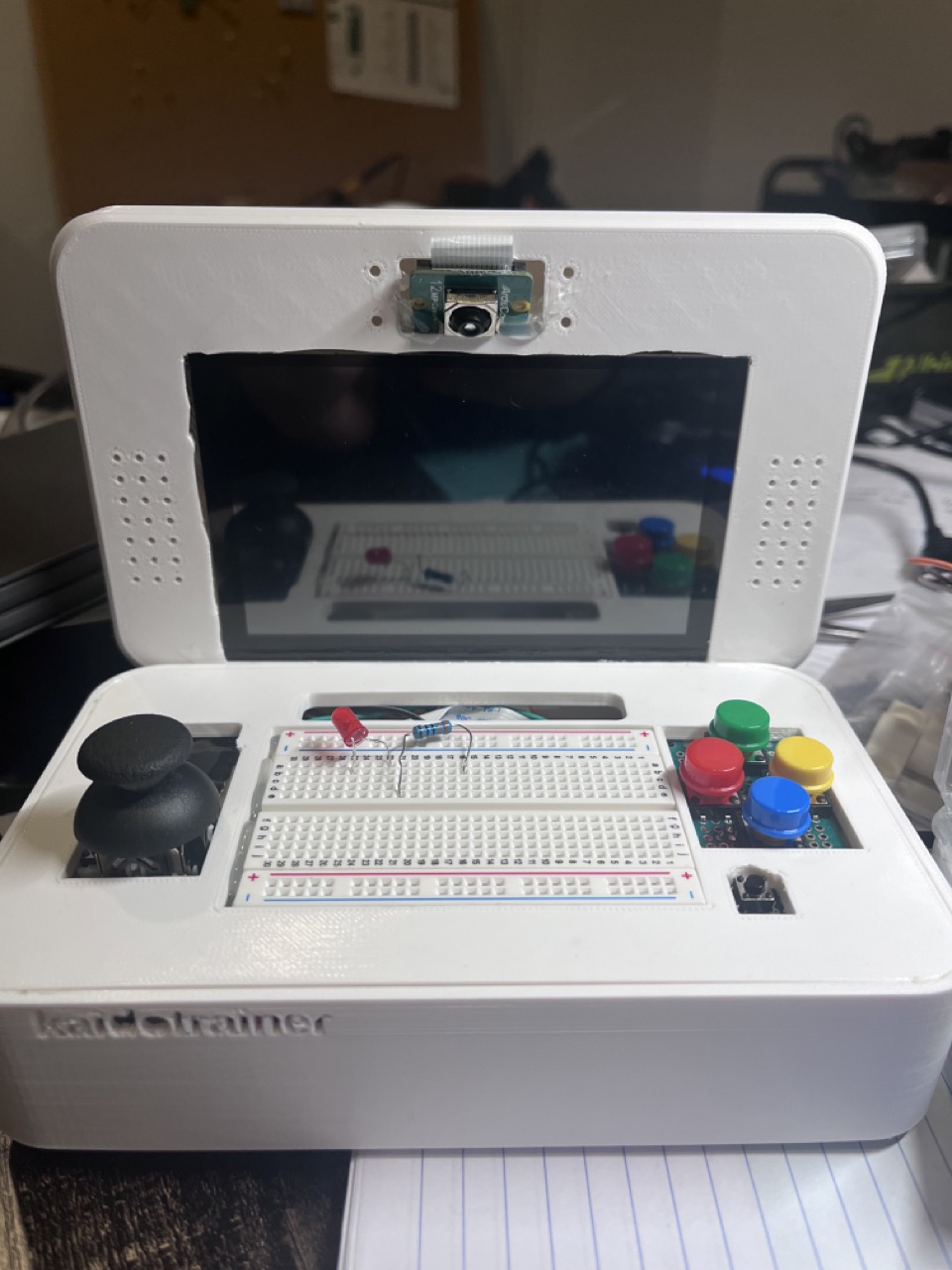
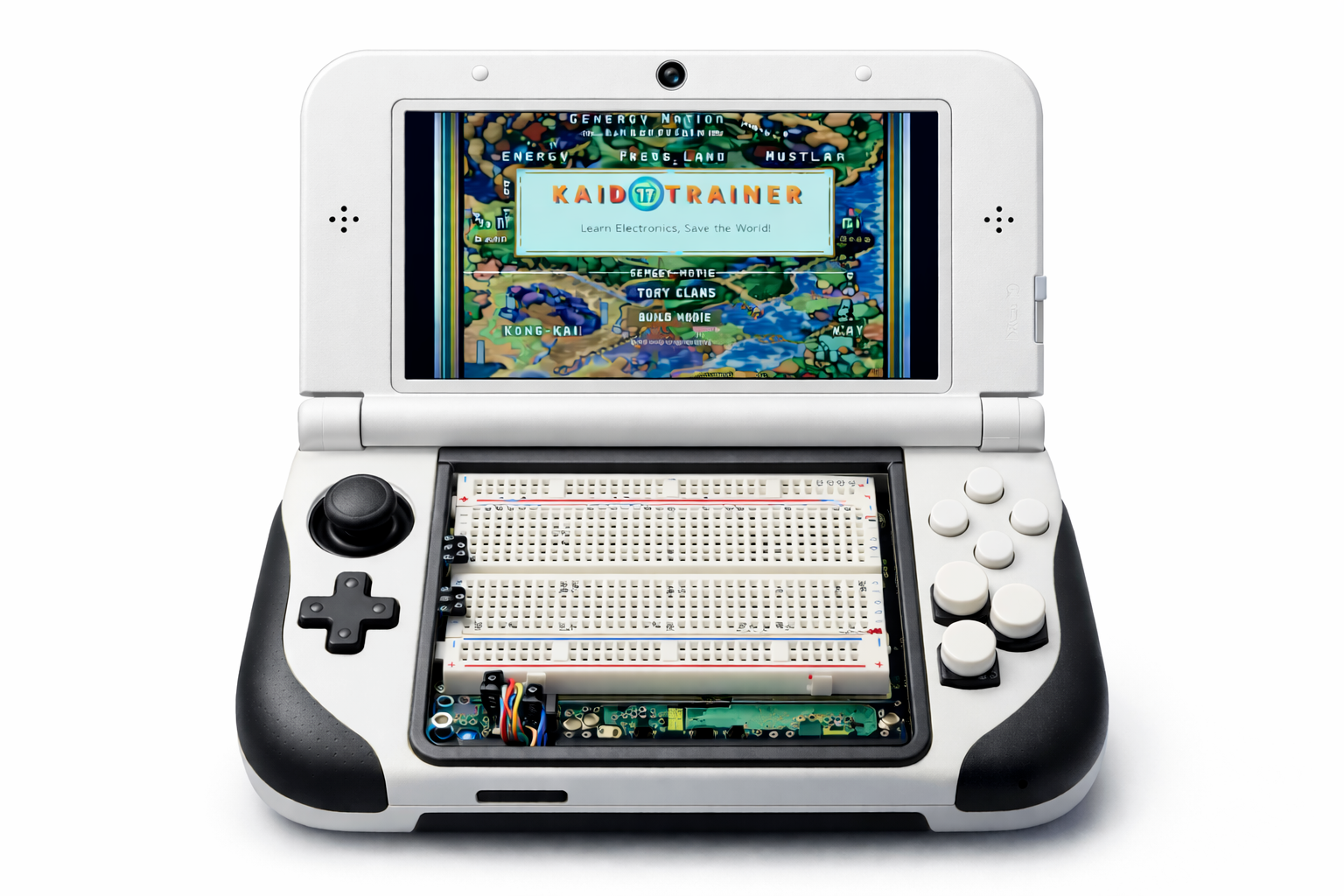
KaidoTrainer is a handheld game console with a breadboard built right into the gamepad. Kids build physical circuits on the device itself — with real resistors, LEDs, and logic gates — and a retro-pixel RPG on the built-in screen responds to what they build. Wire up a flashlight circuit, and the in-game cave lights up. Build an AND gate, and a locked door opens.
It's Zelda meets circuit building, all in one device. Play the game and learn electronics on accident.
Ages 8+, no electronics experience needed. Our in-game companion Kaido teaches as you play. Come pick one up and build something that actually works.
Try the browser demo at kaidotrainer.com.

Ian Onuska
I'm Ian Onuska, founder and CEO of ONUSKA & BROWN Technologies. I'm building KaidoTrainer, a handheld game console with a breadboard built into the gamepad that teaches kids real electronics through gameplay. Before this, I ran Prototype Notebook, an electronics kit business that introduced hundreds of beginners to circuit building. I'm finishing my EE degree at Drexel University. I started KaidoTrainer because I believe kids learn engineering best when the physical object they hold does something real. We're building something that really has never existed before even though it seems obvious.
More Maker Info
https://kaidotrainer.com/More Event Info
More Project Info
https://kaidotrainer.com
What inspired you to make this project?
I spent a few years running Prototype Notebook, an electronics kit business that introduced hundreds of beginners to circuit building. Over that time I noticed something specific: kids were genuinely excited when they wired up a real circuit and something real happened - an LED lit up, a buzzer sounded. But that excitement was hard to sustain outside of structured classroom time. The game loop that keeps kids playing Zelda or Pokemon for hundreds of hours didn't exist in electronics education.
KaidoTrainer is what happens when you put those two things in the same device. The retro-pixel RPG is the motivation structure. The real circuits are the curriculum. Building the gamepad with the breadboard integrated directly into the device — instead of making it a separate peripheral — came from wanting the physical build to feel as natural and immediate as pressing a button on a Game Boy.
What are some of the challenges you have encountered and how did you address them?
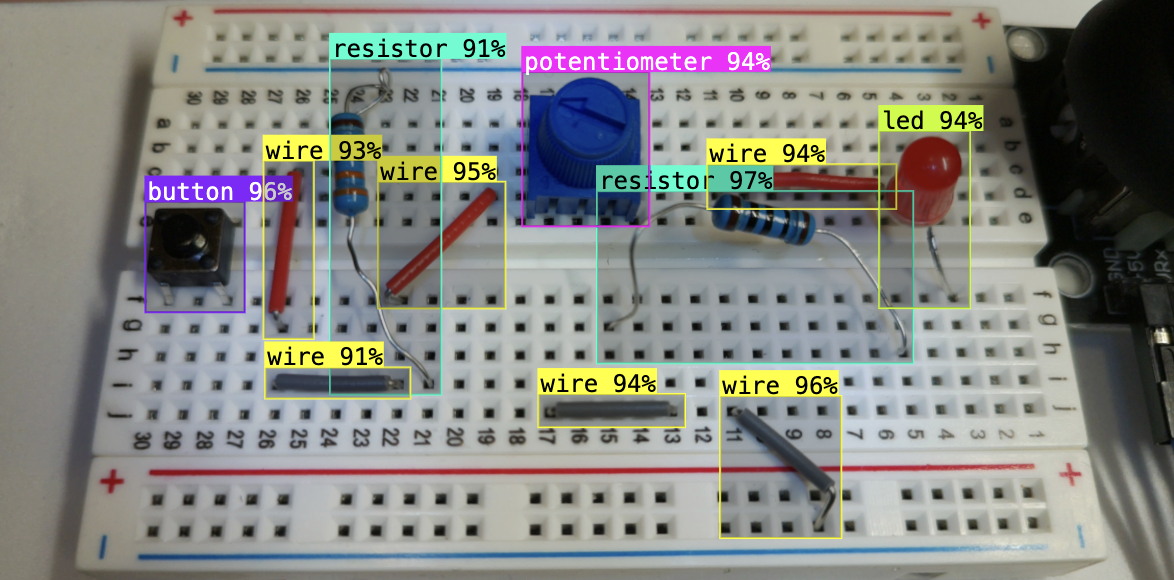
The hardest technical challenge has been the computer vision pipeline. The gamepad's onboard camera has to reliably identify which components are placed where on the built-in breadboard, across different lighting conditions and the variability of kids' hands moving in and out of the frame. We solved this by fixing the camera position and narrowing the CV model's scope to only the components in our kit for the demo phase.
The hardest design challenge has been pacing the difficulty curve. The first circuit has to be simple enough that an 8-year-old who has never touched electronics can succeed, but the game has to keep teaching for long enough that a player actually builds transferable knowledge. We've iterated on this by running playtests at events (Maker Faire Philadelphia, April 2026, was the most recent) and watching where players hit walls.
The hardest business challenge is the one we're still working through: building an audience for a physical hardware product that doesn't ship for another year.